
Our retaining walls will be one of the first features you notice about our home and one of the first aspects you’ll actually engage with upon arrival, so we want them to be perfect. Basic timber or grey blocks ain’t going to cut the mustard.
Hello Firth’s Architectural Masonry block series – perfectly designed with beautiful detailing!! We’ve chosen these wee puppies cos they just look so good. Especially in the slate colour we’ve chosen with the corresponding dark mortar which’ll create a stunning negative detail around the block work.
But the pièce de résistance is the finish we’ve opted for – honed and then sealed. When ready, the blocks will be ‘sanded’ back to a smooth finish, exposing the fine aggregate details within, then sealed, making the blocks pieces of art in their own rite.
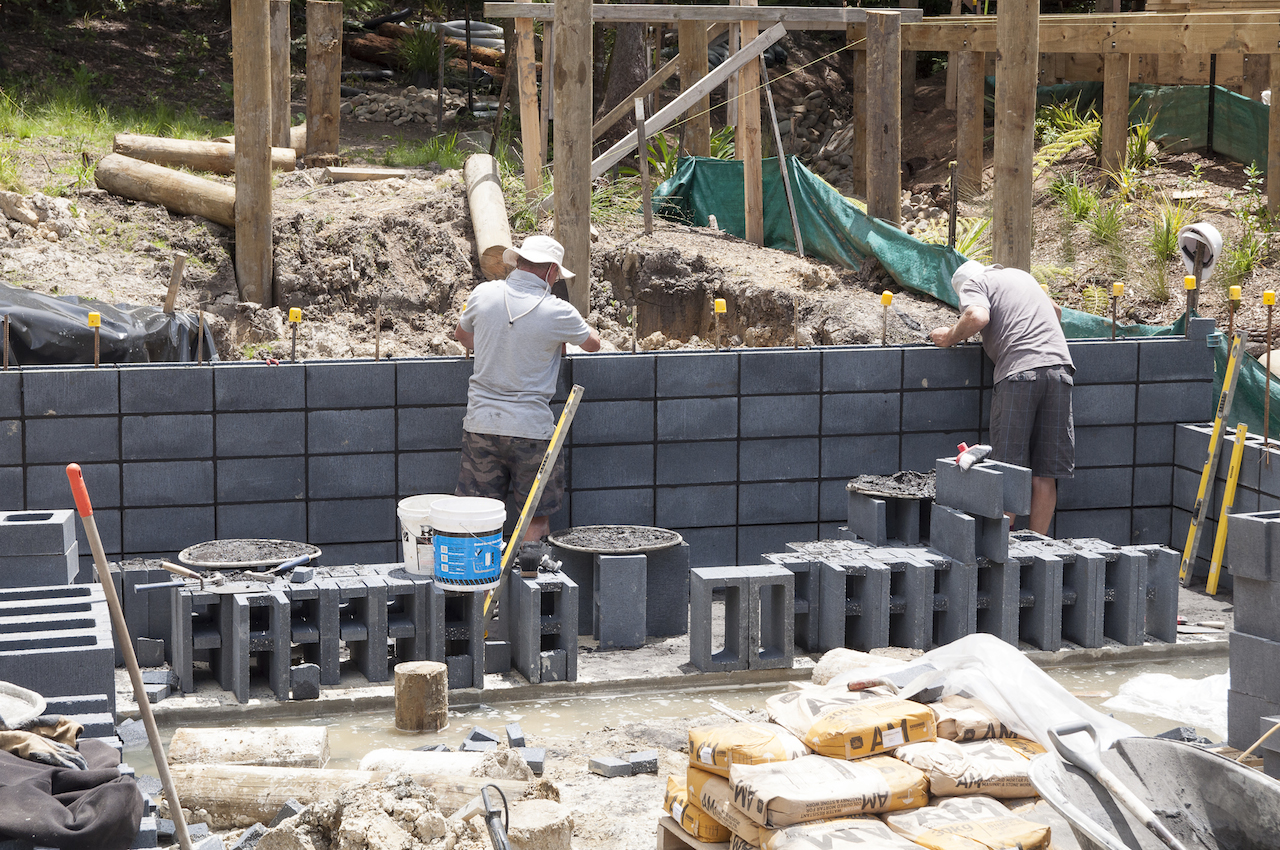
It’s been awesome this week to see these beautiful features of our home beginning to be laid. And to see more progress underway on this troublesome side of the house.

The beautifully designed Firth Architectural Masonry blocks.

One of the block layers in action. These guys were classic, laugh-a-minute Englishmen with non-stop one-liners.

We also chose to go stack bonded vs bricked for a more architectural design.
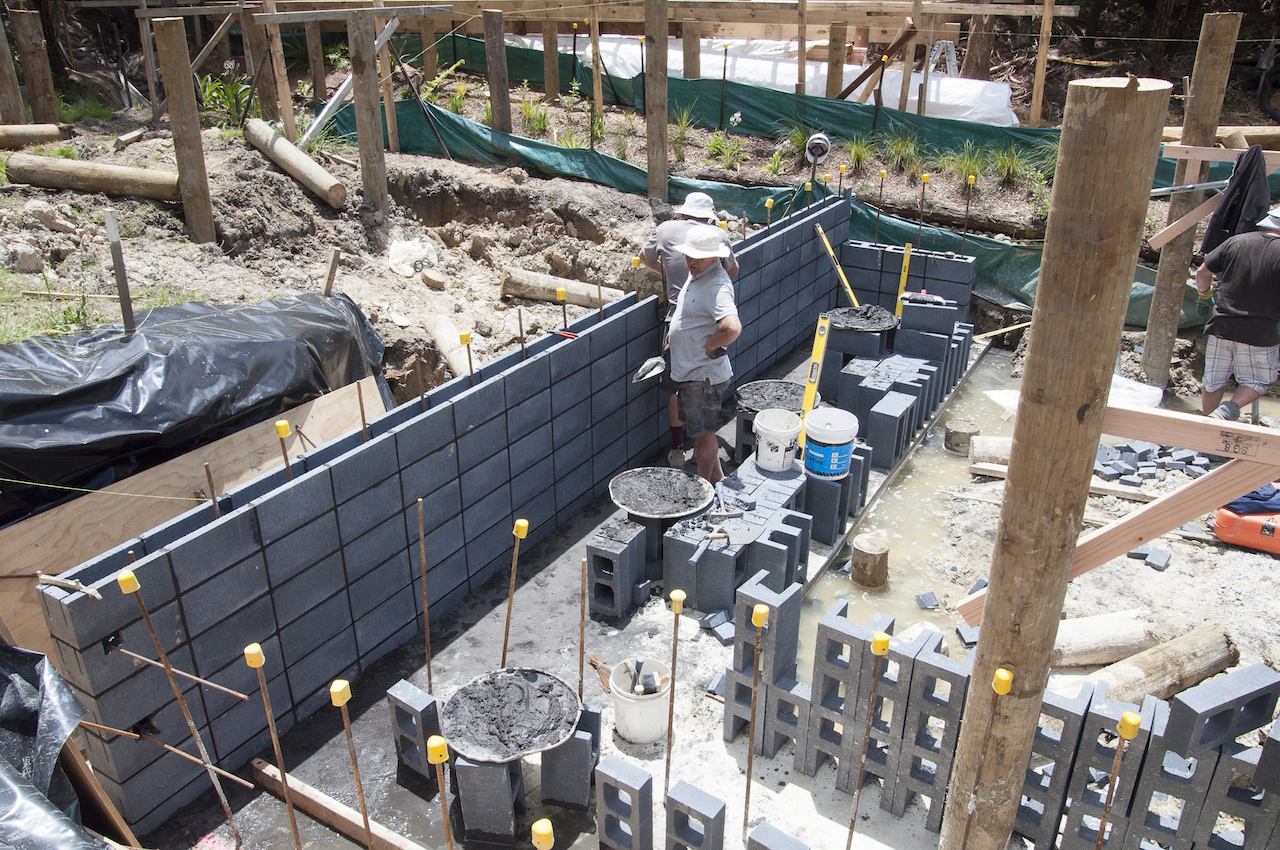
Love the colour – just can’t wait for it to be finished.
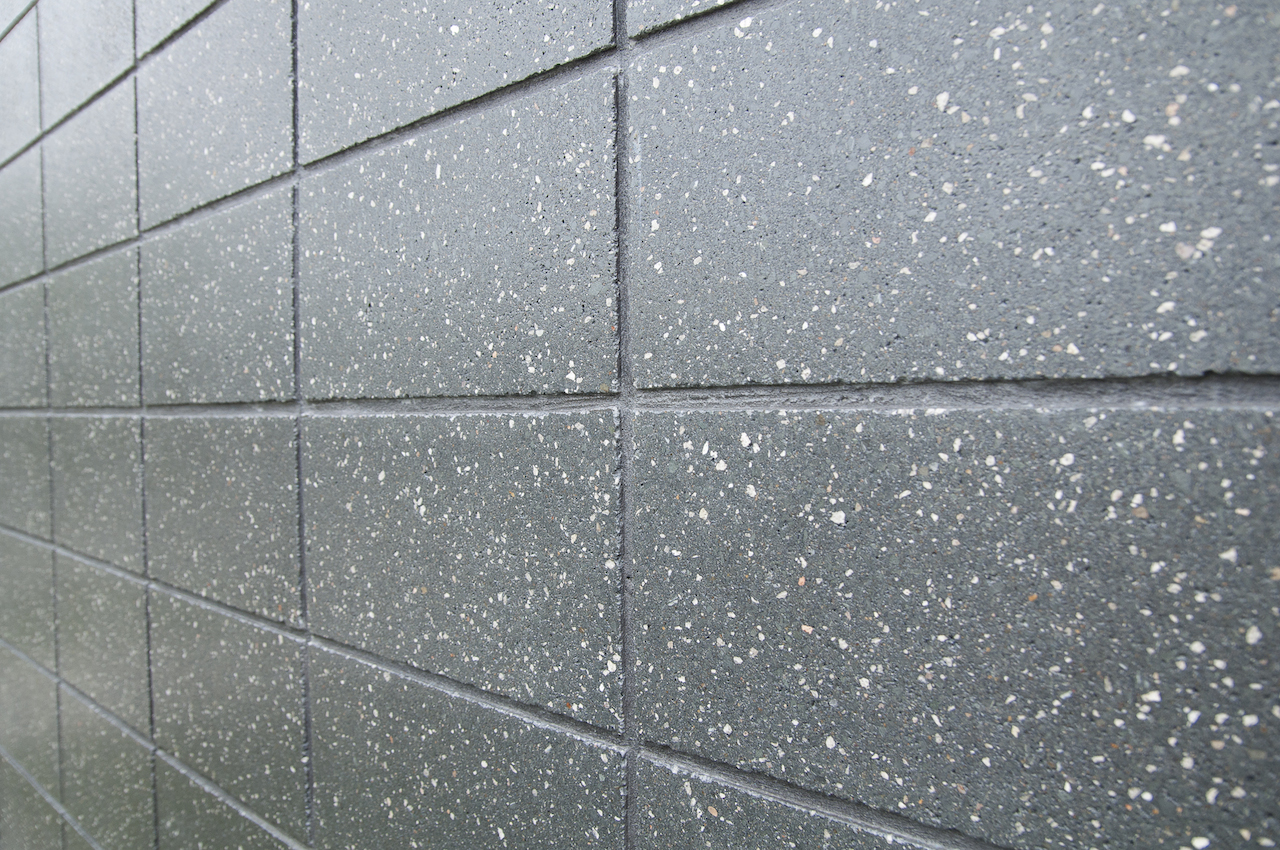
This is what our walls will eventually look like when they are honed and sealed. Mmmm, mmm, mmmmmmm! Although ours will be even spiffier with darker mortar making a beautiful negative detail around the blocks.
Hi Guys,
Really interesting project and looks like you’re generally having fun. One thing that appear to be missing (but it could be me!) are the financial elements i.e. what are the costs versus more traditional builds and is it possible to boil the costs down to a per square metre comparison perhaps?
All the best
Alan
Hey Alan
Thank you. And yes, you’re right, we’re certainly having a lot of fun along the way. We have been sharing some figures between our blog and the Herald weekly updates. It’s quite tough to provide a sqm figure comparison as we’ve up-spec’ed so many aspects – such as choosing the thickest available ceiling panels, the second thickest wall panels, large cantilevered sections requiring significant structural engineering and of course the hoops we’ve had to jump through to be able to build where we are.
But given that, the cost for us was approx $50k to get all walls and ceilings. That’s designed, made and delivered, including all fixings, adhesives, engineering input and top/bottom plates. Remembering that covers insulation too and if you desired, it could be the finished internal surface too. House size is approx 170sqm.
So far we have witnessed the benefits of SIPs as per below, which we believe makes this system more cost effective than traditional methods.
– speed of install – it’s a matter of days and you can have a complete house stood. Saving significant builder time and cost, scaffold hire costs etc etc
– energy saving – it’s estimated we’ll save 50% on a normal house energy bill. And we can see this first hand already. Despite the bedroom pod full of large openings still, when you walk in during these hot days, it’s a cool, moderate temperature.
– design freedom – as they are structural, we were able to achieve 6m spans in our living area without internal walls or steel portal frames. Meaning a cost saving on steel, but visually we have flush walls and complete freedom to place windows where we want, kitchens where we want etc, without trying to avoid the steel beams.
Hope that helps!
Cheers, Ben
Cheers Ben,
So to play devils advocate, what are the negatives that you found so far as there must be some versus other types of build?
Alan
Hey Alan, to be honest we have encountered very few ‘negatives’ so far. The main constraints relate to plumbing and wiring really. Plumbing shouldn’t run in a SIP wall but that was easily over come by putting it up through the floor or through internal walls.
We wanted recessed LED ceiling lights but you can’t put them directly into a SIP panel, but again overcome easily with a drop ceiling to create the cavity space to recess our lights. Has also allowed for some nice negative details as it turns out.
Then electricians were tentative about wiring it, but we’ve just done the first fix and our electricians, EAV said it was a breeze. A bit more work than a timber frame but a lot easier than initially thought. Need to use special cabling though given it touches the polystyrene and it is a lot more expensive than normal electrical cable.
So I guess the main difference is the added thought and detail needed at planning and design time. But that’s not such a bad thing as we’re finding out now as all the tradies ask us questions re details and we’ve got the answers and had the decisions made weeks ago!
As you can tell we’re definitely converts. Becoming more so as the build progresses.